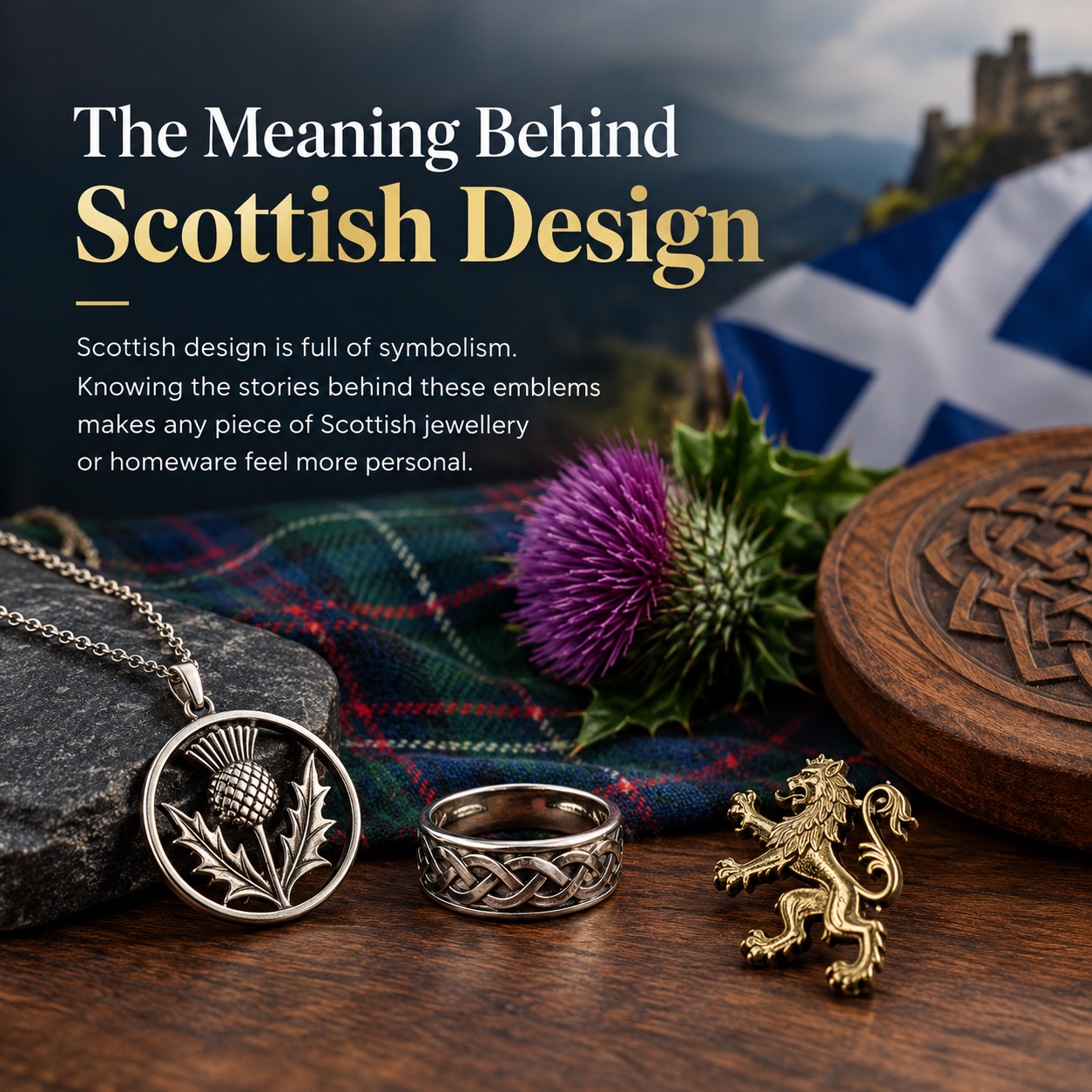
Scottish design is full of symbolism. Knowing the stories behind these emblems makes any piece of Scottish jewellery or homeware feel more personal.
The Thistle
Scotland’s national emblem is the thistle. Legend says that a Norse invader stepped on one barefoot and cried out, alerting the sleeping Scots. Whether or not that’s true, the thistle came to represent defence, resilience and pride. It’s a popular choice for jewellery and gifts because of its strong, protective meaning.
Tartan
Tartan patterns are woven in distinctive colours and checks, and many are linked to particular clans or districts. Today, tartan stands for heritage, belonging and family. You can find it on everything from scarves to keepsake boxes.
The Celtic Knot
Celtic knots have no beginning and no end, symbolising eternity, loyalty and the interconnection of life. That’s why they feature so often on wedding rings, pendants and anniversary gifts.
The Saltire
The white diagonal cross on a blue background is the national flag of Scotland and one of the oldest flags still in use. It’s associated with St Andrew, Scotland’s patron saint.
The Luckenbooth and Claddagh-Style Hearts
The Luckenbooth brooch, a heart often topped with a crown, was traditionally given as a love token and a charm to protect babies. It remains a meaningful gift for weddings and new arrivals.
The Highland Cow, Stag and Lion Rampant
Scotland’s wildlife and heraldry appear in modern gifts too. The stag represents strength and the Highlands, while the lion rampant is the royal banner of Scotland.
Choosing a Symbol That Means Something
Pick a symbol that reflects the person: a thistle for someone resilient, a Celtic knot for a couple, tartan for family ties.